Wildlife Exclusion in Orlando, FL
Orlando Attic Animal Removal Pros seals the soffit returns, gable vents, roofline gaps, and builder openings that let animals into Orlando-area attics. Exclusion is what turns a removal into a solved problem — because an open entry point is a vacancy sign, and Central Florida always has a tenant looking.
Where animals actually get in
Almost never through a hole you can see from the driveway. The repeat offenders on Orlando homes are soffit returns (where the soffit meets the roof at an inside corner), gable and ridge vents with light screening, gaps where two roof planes intersect, openings around plumbing stacks and utility penetrations, and chewed or storm-loosened fascia. Oak shade hides most of these from the ground, which is why exclusion starts with a full roofline inspection rather than a patch on the one hole you happened to find.
Materials matter more than effort
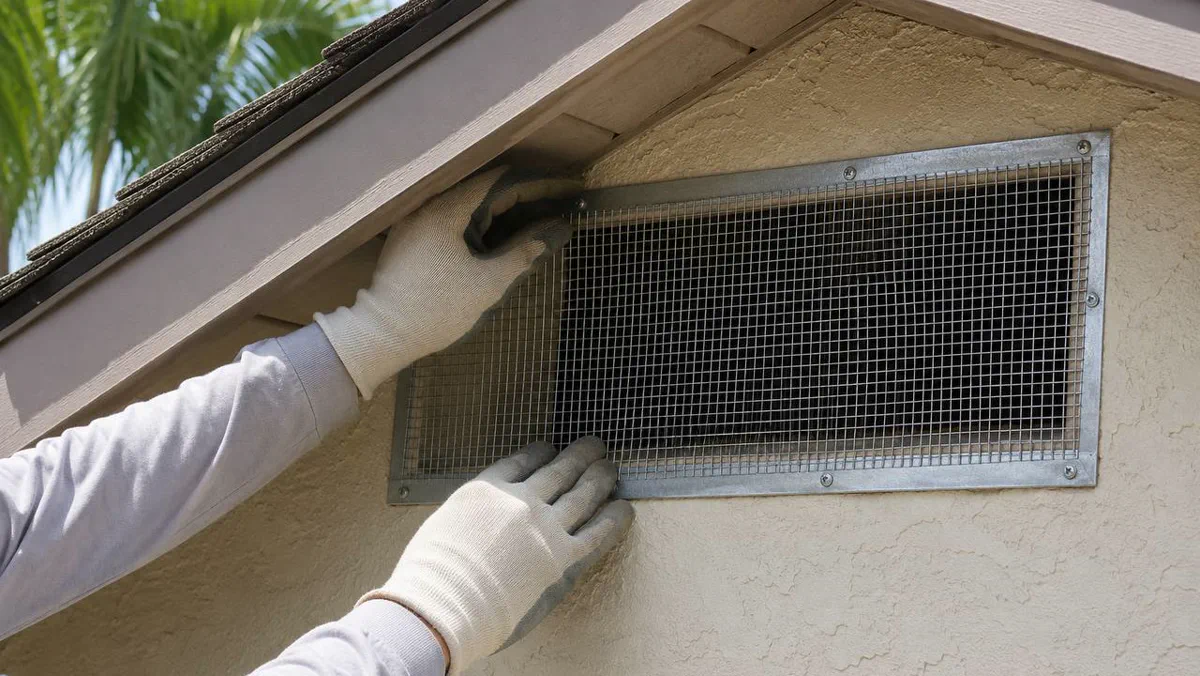
Foam, caulk, and screen-door mesh are overnight projects for a rat and an afternoon for a raccoon. Exclusion that lasts uses metal flashing, heavy-gauge hardware cloth, and structural repair at chewed wood — materials that do not give when gnawed or pried. Vent openings keep their airflow but get screening animals cannot defeat, and soffit returns get closed the way they should have been built.
Sealing order matters: animals out first
Exclusion done while an animal is still inside traps it — and a trapped animal chews or claws its way out through whatever is softest, sometimes into the living space. The sequence is always removal or one-way exit first, confirmation the attic is empty second, permanent sealing third. For bats the sequence also has a legal calendar attached, covered on the bat removal page.
What an exclusion quote covers
Scope depends on the roofline, not the animal: the number of entry points and vulnerable spots, roof height and access, and how much chewed wood needs repair. A one-story ranch with two gaps is a different job from a two-story with a complex roofline under oak canopy. The inspection maps every point so the quote covers the house, not just the hole — partial exclusion is how the problem comes back with a different animal next season.
Solved it once, want it to stay solved?
Exclusion is the difference between removing this animal and removing an animal every year. Request a quote and the inspection will map every entry point on the roofline.
Frequently asked questions
What is wildlife exclusion exactly?
Finding and permanently sealing every opening animals use to enter the attic — soffit returns, vents, roofline gaps, utility penetrations — with materials they cannot chew or pry open. It is the prevention half of every removal job.
Can I do exclusion myself with foam and mesh?
Hardware-store foam and light mesh fail fast against rats and raccoons. If you DIY, use metal flashing and hardware cloth — and only after the attic is confirmed empty, or you will seal the animal inside.
Why seal openings the animal was not using?
Because the next animal will use them. A roofline that admitted one rat has the conditions that admit the next one, so durable exclusion covers the vulnerable points, not just the active hole.
Does exclusion block attic ventilation?
No — vents stay functional. Screening is sized to keep airflow and block animals, and soffit repairs restore the venting the builder intended.